by – Antony Renson
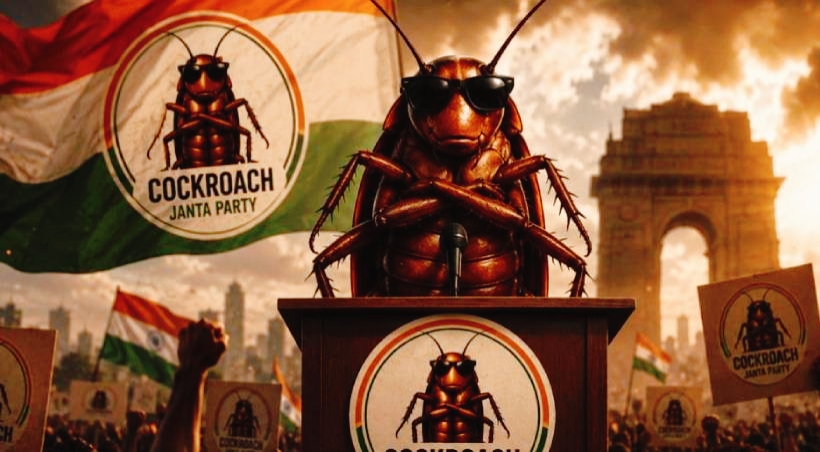
Over the past few days, a phenomenon named ‘CJP’ or the ‘Cockroach Janata Party’ has taken Kerala’s social media landscape by storm. At a glance, one might easily dismiss it as just another troll group or a fleeting digital satire. However, the extraordinary meteoric growth of its pages in a span of mere days, followed by swift bans, crackdowns, and death threats directed at its creators, points to something far deeper. This is no longer a mere joke; it has evolved into a silent digital resistance of a massive populace disillusioned with the contemporary political establishment. The Real Fear Behind the Laughter why would actual ruling regimes and powerful political forces, including the Sangh Parivar, be so deeply threatened by a fictional, satirical political party? The answer is simple: throughout history, authoritarian systems and establishments have feared satire more than any formal critique. Trolls and memes possess a unique capability to pierce through public consciousness—especially among the youth—much faster than disciplined political speeches or serious prime-time media debates.This community effortlessly lampooned the administrative failures, hate politics, and hypocrisy of mainstream politicians that even traditional media often hesitates to question. It operated as a classic ‘digital crowd’—lacking a rigid organizational structure or predictable leadership. Because it is nearly impossible for state apparatuses to pinpoint where to strike, they view this invisible digital defiance with profound insecurity. The bans, page takedowns, and intimidation tactics are natural knee-jerk reactions born out of that absolute fear.A Digital Congregation of an Exhausted Society the explosive growth of CJP within a short window proves the existence of a massive, exhausted demographic currently suffocated by today’s polarized political atmosphere. Beyond blind party loyalty and toxic communal politics, it became a common ground for independent thinkers and citizens who just wanted a space to think and laugh freely. While conventional political parties thrive on dividing society, this platform provided an avenue to view politics through a lens of humor without throwing mud at one another.In the digital age, dissent does not necessarily manifest on the streets through stone-pelting or state-wide shutdowns (Hartals). Instead, it manifests as sharp, satirical commentary on social media timelines. Even if the name ‘CJP’ fades away tomorrow, the politics of free expression and democratic dissent it ignited will remain vibrant across digital platforms.From an Unorganized Crowd to a Political Alternative…?The likelihood of this collective abruptly transitioning into a mainstream political party to contest elections might be slim. Actual politics demands ground-level organizational machinery, financial resources, and a concrete ideology. However, dismissing this as a mere ‘temporary crowd’ would be a monumental political oversight.While it may not instantly disrupt traditional vote banks, such satirical collectives play a monumental role in shaping public opinion. History reminds us that significant revolutions and political shifts have frequently germinated from such seemingly minor parodies and grassroots digital gatherings.Regimes that believe dissent and laughter can be snuffed out through intimidation and censorship must realize one thing: resistance in the digital world does not end with the deletion of a page. It will inevitably reincarnate in newer forms, with much greater resilience.